
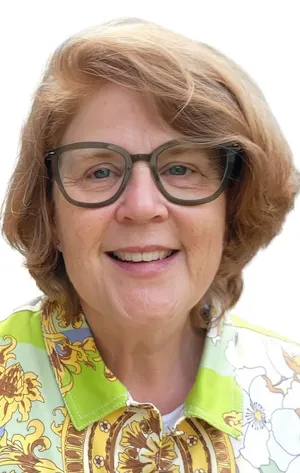
Today, we are happy to bring you our conversation with Ruth Hill, author of Reckoning with Race in New Worlds
What inspired you to write this book?
It all began during a trip to Mexico City thirty years ago. I happened upon a book of eighteenth-century oil paintings from colonial Mexico and Peru with labels that identified groups or types of people (castas). These casta paintings, as they became known, immediately captured my imagination because of the striking way they reckoned with race: they colorfully portrayed reproductive unions and the offspring of couples belonging to different castas. I found myself fascinated by the elaborate visual and written languages they used to make sense of human difference. Most castas paintings were done in oil, and a handful of them were accompanied by rhymes that defined the character of the progeny who resulted from mixed reproductive unions. The more I looked at these oil paintings, and at the much lesser-known casta paintings done in watercolor, the more questions I had. As I delved further into casta paintings and poetry, I became convinced that casta—what the English-speaking world today translates as race—was not a monolithic, static concept. It had histories. Around the same time, I returned to the writings of James Baldwin and Toni Morrison, whose work laid the foundations of critical whiteness studies. Their insights gave me the confidence to pursue an idea that, at the time, many scholars of Spanish and Portuguese Asia, America, and Africa either overlooked or explicitly rejected: that casta and whiteness had to be understood as historical constructions rather than biological realities. That discovery set me on an extraordinary intellectual odyssey. I wanted to travel back through time and space to excavate the religious and scientific worlds in which casta first emerged in the Middle Ages, then follow its transformations in Spain and Portugal and throughout their colonial settlements—so-called new worlds—in the Americas, Asia, and Africa. So, a chance encounter with a book of arresting paintings from colonial Mexico and Peru sparked my reckoning with what we today call race, and the deeper I went, the more intriguing—and unsettling—the story became.
What did you learn and what are you hoping readers will learn from your book?
I learned, and I hope that readers will learn, that casta in Spain, Portugal, and their new worlds in the Americas, Asia, and Africa was a weaving of concepts, beliefs, and legal and extralegal systems that frequently unravelled. Over the past two decades in particular, I have come to understand how difficult it was for the Roman Catholic Church and Portuguese and Spanish administrators to sort out who belonged to what casta, because crown and church edicts opened the door for free descendants of mixed persons to “whiten”—to enter castas, or categories, with more Spanish or Portuguese ancestry than their ancestors had possessed. Eventually, just as many written equations for whitening, or blanqueamiento (in Spanish), suggested, free persons with a scant amount of non-European ancestry could become, legally and socially, Whites (blancos). Such people did so to access the privileges and duties held by blancos/Whites in new worlds. Also, I came to realize that Spanish American casta paintings did not celebrate human diversity. Instead, all represented blanqueamiento as possible and desirable for Amerindian peoples, and most denied that possibility altogether for Black Africans. This second group of casta paintings were ominous darkening equations: they conveyed that Whites and Amerindians who had children with Blacks plunged their progeny into an irreversible blackness. I came to realize that visual darkening equations, like their written counterparts, also could white out or black out what was happening outside the frame or page. Legal and religious historians and other scholars tell us that reproductive unions between free Black persons, “Indians,” and Europeans, over several generations, expanded the casta of blancos (and brancos in Portuguese Africa, Asia, and America), thereby diluting the privileges that had for many generations belonged to persons who claimed “untainted” whiteness. I hope that my chapter on casta paintings and casta poems not only visualizes the intricacies and contradictions of racial-becoming but also directs readers to critical works by art historians such as María Concepción García Sáiz, Ilona Katzew, and Magali Carrera.
What surprised you the most in the process of writing your book?
I intuited early on that the beliefs, popular science, and vocabularies of agriculture and husbandry (including textiles) had profoundly shaped the concepts of casta and raza since the middle ages. Still, it took me over a decade to understand—and to explain in the early chapters of my book—how early modern ways of knowing nature that were rooted in everyday science drew analogies between humans, non-human animals, minerals, and vegetable life embedded in the concept of casta itself. Proverbial wisdom around casta in animal breeding, for example, turned on the mixing of different castas and the number of reproductive generations that caused a stock, breed, or kind (casta) to improve or decline through mixing with other castas or being reared in a non-native environment. I came to realize that even formal science relied on that commonsense science, or “folkbiology,” as cognitive scientists call it. When erudites and common people alike assigned humans to castas, they looked outside the human domain. A renowned cultural critic, for instance, reasoned that African ancestry could completely disappear after the descendants of an African family lived outside of Africa over many generations, just as a casta of cabbage native to a region of Spain became a different casta of cabbage altogether when farmers planted or transplanted it in another region, or a casta of sheep improved or declined when it was reared outside of its native environment. The reproductive mingling of diverse human castas was almost always compared to breeding non-human animals such as dogs, sheep, horses, and mules. It was really jarring to me –and to my readers, I expect—to see a Roman Catholic theologian equate Spanish males to stallions, Amerindian women to mares, and their offspring to mules so that his readers would understand how much non-Spanish ancestry made someone an “Indian,” a “half-breed” (mestizo), or a “native quadroon” (cuarterón de indio). Still another revelation for me was how profoundly Spanish physicians, horse breeders, sheep breeders, and naturalists impacted racial thought in eighteenth-century British America and the Early Republican United States. Founding fathers of antiquarianism, chemistry, medicine, and race “science” in the United States, from Philadelphia to Virginia, were indebted to such Spaniards, whether they agreed with them or not, and this epiphany led me to research and write the final two chapters of the book.
What’s your favorite anecdote from your book?
I still go back to brief anecdotes in my chapter on a 1734 map of the Philippine Islands and other works by Pedro Murillo Velarde, a Jesuit cartographer, jurist, and historian in Manila. In his historiographical geography of the Islands, published after his return to Spain in 1752, he remembered: “The conflux of various peoples has no parallel, I believe, anywhere else in the world. In the course of an hour spent in the Tuley, or Port of Manila, you will see nearly all the peoples of Europe, Asia, America, and Africa pass through; you will see their manners of dress; you will hear their languages. The amazing thing is, they all communicate with each other in Spanish. But, how? Each people has put together a gibberish whereby they understand each other. One day I heard a pitched argument between a Sangley, an Armenian, and—I think—a Malabar. They were all speaking Spanish, and I didn’t understand a single one of them, because I hadn’t studied the vocabularies [of their languages]. For example, the Chinese, to say alcalde [mayor], español [Spaniard], and indio [Filipino native], say them like this: alicaya, cancia, juania.” To me, this recollection reveals how colonialism befuddled the colonizer. But it is memorable for another reason: after I had finished writing and was editing the book manuscript, I came across historian Sanjay Subrahmanyam’s connected histories concept, which in several ways fit with my colonial connectedness concept. Wrestling with mine and his concepts made me connect with this anecdote profoundly, and I decided to retitle my chapter, “Racial Cartography and the Connectedness of New Worlds: A View from Manila.”
What’s next?
I will continue to teach undergraduate courses in Spanish and English that model how a liberal arts education prepares students to bring ethics, critical reasoning, and creativity to bear on today’s most pressing questions. Also, I envision that the rapport between technology and the religious imagination in the early modern era will remain a significant research and publishing interest.