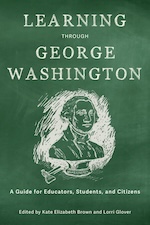
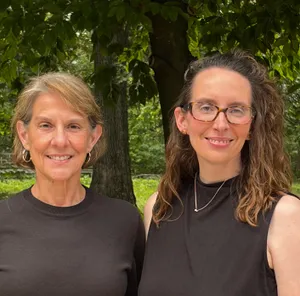
Today, we are happy to bring you our conversation with Kate Elizabeth Brown and Lorri Glover, editor of Learning Through George Washington: A Guide for Educators, Students, and Citizens
What inspired you to write this book?
We’ve worked together as part of the George Washington Teacher Institute at Mount Vernon for over a decade, along with many outstanding academic historians, K-12 teachers, museum and educational experts, and public historians. We wanted to bottle up the scholarship, pedagogy, and strategies—the magic—of GWTI for readers unable to be a part of this on-site experience. We also wanted to share the collective insights we’ve gained for anyone seeking knowledge about Washington and the eighteenth century to be better informed and civically engaged today.
What did you learn and what are you hoping readers will learn from your book?
Although we knew the team of authors who contributed to the volume and, in many cases, had worked together many summers, we did not see the full picture of all our interconnections until the essays arrived in our inboxes.
We hope readers will be able to gain an authentic, more complete understanding of George Washington—moving beyond reflexive adoration and presentist “cancelling.” Instead, readers will, we hope, meet Washington in the eighteenth century, with all the complexity of his humanity and the wider context of his world, and see why his legacies still matter today.
What surprised you the most in the process of writing your book?
We were surprised that no one else had ever created a book quite like this one, bringing together classroom teachers, academic researchers, and applied historians to muster their collective skill and wisdom!
What’s your favorite anecdote from your book?
We’ll share two: Lucy Smith’s, a professor at Truman State University, wrote an essay focused on interpreting and teaching Washington’s dentures. She revealed how he held the whole Atlantic World in his mouth—teeth created and/or extracted in Africa, North America, Europe, and the Caribbean.
Shawnell Padilla, a librarian in Alaska, showed us how to inspire the youngest readers in elementary school to engage with primary sources to spark a love of reading and history and understanding of Indigenous perspectives.
What’s next?
We and all the contributors are returning to our day jobs—in classrooms and universities, libraries and school districts, and public history sites including Mount Vernon. But we are available for professional development, talks, and consulting, if we’ve inspired readers to keep learning!